Thursday, 26 September 2019

ENVIRONMENTAL NEWS TO SHARE & COMMENT IN CLASS


FRIDAYS FOR FUTURE


The largest series of climate-change demonstrations ever


Image result for fridays for future images
REPORTS: Mar Albarañez 2º ECA

Activists all around the world are preparing for what they hope will be the largest series of climate-change demonstrations ever, with thousands of events planned in over 150 countries.
On September 20 and September 27, a broad coalition of environmental groups are calling on workers and students to participate in a Global Climate strike, and to walk out of their schools and workplaces to “demand an end to the age of fossil fuels.” The Climate Strike movement is led in part by Greta Thunberg, the sixteen-year-old Swedish activist whose confrontational speech at a United Nations climate conference went viral in 2018.
U.N. diplomats will convene again in New York next week for the organization's 2019 Climate Action Summit , at which Secretary General António Guterres is expected to urge world leaders to commit to more aggressive emissions reduction targets.
While all that’s going on, activists in Colorado and beyond hope to bring attention to the urgent need for climate action with rallies, protests, town halls and more.
_WESTWORLD 18-9-2019_


Monday, 16 September 2019

ENVIRONMENTAL NEWS TO SHARE & COMMENT IN CLASS

Storm brings heaviest rainfall on record to parts of eastern Spain

REPORTS: CARMINA MARTÍNEZ DÍAZ

Extreme rainfall triggers flooding in parts of Spain 
Parts of eastern Spain have received what in some places was the heaviest rainfall on record, as storms wreaked widespread destruction and killed at least two people. One of the first places to be hit was Ontinyent, south of Valencia, where almost 300mm fell in 24 hours, the heaviest rainfall recorded there since 1917


At least five people have died and 3,500 have been evacuated from their homes after flash floods struck south-eastern Spain.
Rivers burst their banks as some areas of Valencia, Murcia and eastern Andalucía saw the heaviest rainfall on record.
Vehicles were swept away by rushing flood waters, causing at least three deaths.
One man was killed after getting stuck inside a flooded motorway tunnel.
Another man was found dead in the village of Redovan in Valencia after leaving his home on foot earlier on Friday, according to Reuters.
Torrential rain caused chaos on roads and public transport with two airports in Murcia and Almeria closing down, leaving travellers stranded.
Thousands of police, fire-fighters and soldiers have been deployed in a rescue operation, some in boats and helicopters.
One emergency worker told Reuters that a man was holding onto a traffic sign as he awaited rescue from the flooding.
Several railway lines and many schools in the region were shut down by the adverse weather conditions, with 689,000 students affected in Valencia alone, according to AFP.


Friday, 3 May 2019

Tuesday, 16 April 2019

Learning English idioms


Idioms will help improve your understanding of the English language

While opening a text book and studying for multiple hours a day will certainly help you learn English, sometimes it’s a good idea to immerse yourself fully into British culture and talk with the locals. By doing this, you’ll likely to come across expressions that leave you scratching your head, but this is where the fun is, as mastering the use of idioms will help you enjoy fluent conversations with locals – and understand more difficult speech/text in return.

Idioms give a deeper insight into British culture

If you’re planning to live, work or study in an English speaking society, avoiding idioms will not do you any good at all as you’ll miss out on inside jokes and perhaps fail to grasp the concept of a conversation altogether. Idioms themselves give a deeper insight into British culture and actually make language a lot more interesting, so here are some English idiomatic meanings.
  • Barking up the wrong tree = looking in the wrong place/accusing the wrong person
  • The ball is in your court = it’s up to you to take the next step/make the right move
  • Add insult to injury = to further a loss with indignity or mockery/ to make an unfavourable situation a lot worse than it already is
  • Beat around the bush = talking around a certain subject or issue rather than getting to the main point
  • Best thing since sliced bread = a good invention, innovation, idea or plan

To analyse idioms further, let’s take a closer look at the last example, “best thing since sliced bread,” which means a good invention, innovation, idea or plan. It sounds obvious, but this idiom literally came about when sliced bread started to hit the shelves back in 1928. People were so amazed by the idea that they regularly used the idiom to express their enthusiasm for something.
Knowing this fact helps those learning English appreciate how language develops and explains why there are many obscure sayings within the language itself


Sunday, 14 April 2019

The disarming case to act right now on climate change | Greta Thunberg

In this passionate call to action, 16-year-old climate activist Greta Thunberg explains why, in August 2018, she walked out of school and organized a strike to raise awareness of global warming, protesting outside the Swedish parliament and grabbing the world's attention. "The climate crisis has already been solved. We already have all the facts and solutions," Thunberg says. "All we have to do is to wake up and change."
Check out more TED Talks: http://www.ted.com


If you think that the video was interesting here you have some 

Additional Resources for you to Explore:


How long will human impacts last?Imagine aliens land on Earth a million years from now. What will these curious searchers find of us? They will find what geologists, scientists, and other experts are increasingly calling the Anthropocene, or new age of mankind. David Biello explains how the impacts that humans have made have become so pervasive, profound, and permanent that some geologists believe we merit our own epoch.

Why the Arctic is climate change’s canary in the coal mineThe Arctic may seem like a frozen and desolate environment where nothing ever changes. But the climate of this unique and remote region can be both an early indicator of the climate of the rest of the Earth and a driver for weather patterns across the globe. William Chapman explains why scientists often describe the Arctic as the “canary in the coal mine” when it comes to climate change.

Are we running out of clean water?Despite water covering 71% of the planet’s surface, more than half the world’s population endures extreme water scarcity for at least one month a year. Current estimates predict that by 2040, up to 20 more countries could be experiencing water shortages. These statistics raise a startling question: is the Earth running out of clean water? Balsher Singh Sidhu takes a closer look at water consumption.


When will the next mass extinction occur?About 66 million years ago, a terrible extinction event wiped out the dinosaurs. But it wasn’t the only event of this kind -- extinctions of various severity have occurred throughout the Earth’s history -- and are still happening all around us today. Borths, D'Emic, and Pritchard give a quick history of mass extinctions.

What really happens to the plastic you throw awayWe’ve all been told that we should recycle plastic bottles and containers. But what actually happens to the plastic if we just throw it away? Emma Bryce traces the life cycles of three different plastic bottles, shedding light on the dangers these disposables present to our world.

The life cycle of a t-shirtConsider the classic white t-shirt. Annually, we sell and buy 2 billion t-shirts globally, making it one of the most common garments in the world. But how and where is the average t-shirt made, and what’s its environmental impact? Angel Chang traces the life cycle of a t-shirt.

Wednesday, 10 April 2019

VOCABULARY ACCURACY: avoid the word VERY


Three Telling Quotes About ‘Very’

  1. Substitute ‘damn’ every time you’re inclined to write ‘very;’ your editor will delete it and the writing will be just as it should be. ~Mark Twain
  2. ‘Very’ is the most useless word in the English language and can always come out. More than useless, it is treacherous because it invariably weakens what it is intended to strengthen. ~Florence King
  3. So avoid using the word ‘very’ because it’s lazy. A man is not very tired, he is exhausted. Don’t use very sad, use morose. Language was invented for one reason. It also won’t do in your essays. ~N.H. Kleinbaum


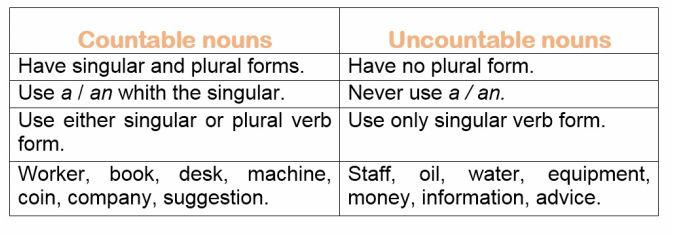
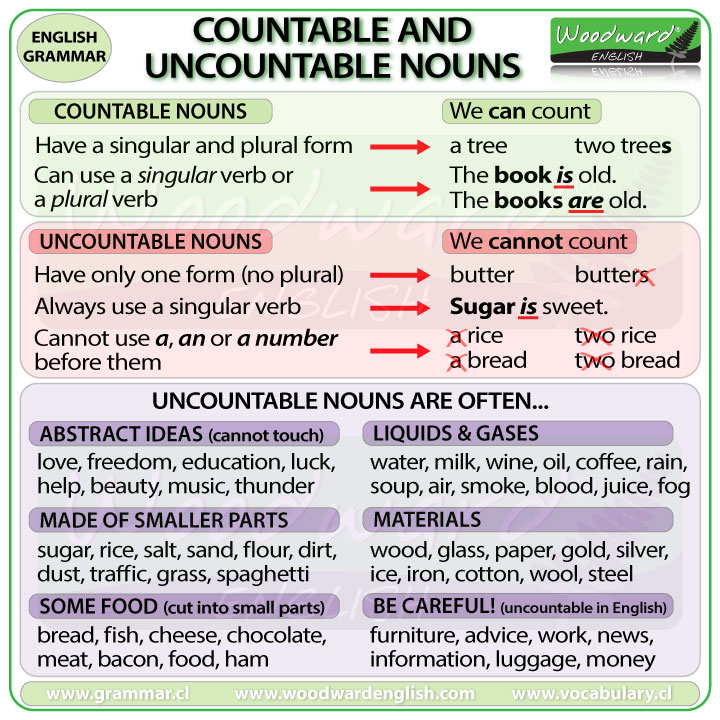
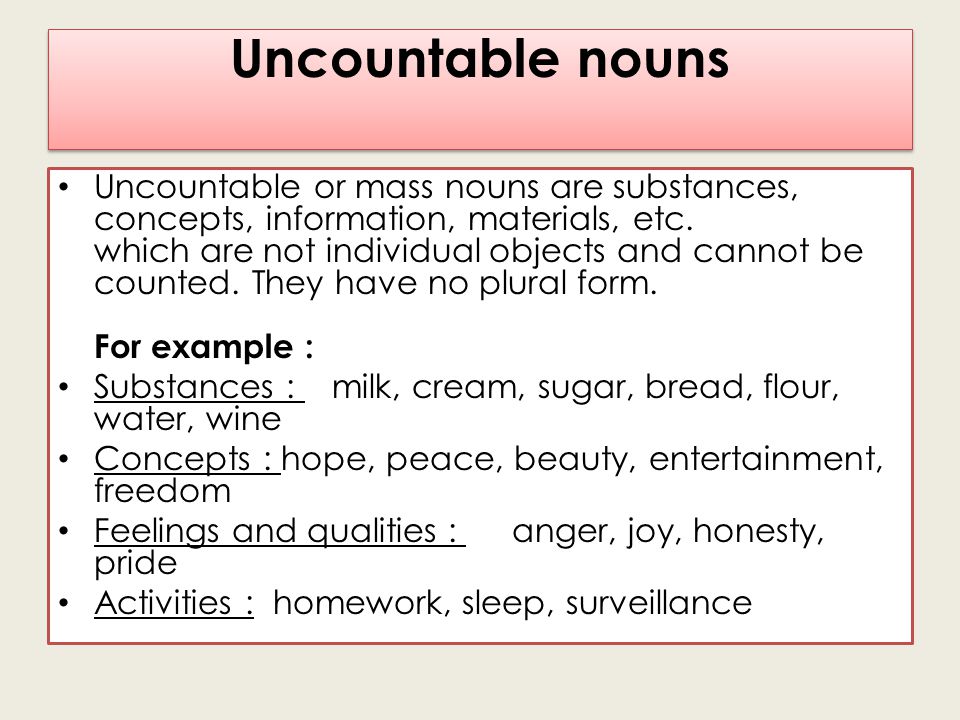
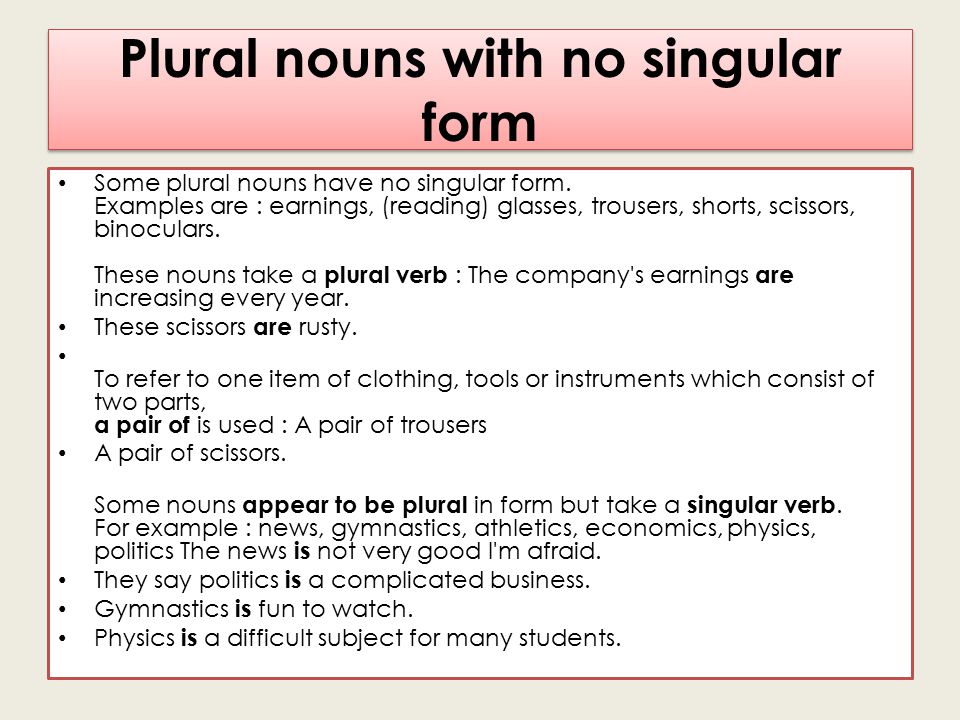
COUNTABLE AND UNCOUNTABLE NOUNS

Resultado de imagen de countable and uncountable plural equipment people
Resultado de imagen de countable and uncountable plural words


Resultado de imagen de countable and uncountable plural equipment people
Resultado de imagen de countable and uncountable plural scisors glasses

Friday, 1 March 2019

EARTH DAY April 22nd 2019 - PROTECT OUR SPECIES

Image result for PROTECT OUR SPECIES 2019 imagesImage result for earth day 2019 images

Earth Day 2019 is an event observed annually on April 22
It is a day held to demonstrate and promote environmental awareness and calls for the protection of our planet. 
Today, Earth Day2019 is celebrated in more than 193 countries each year.
This year the theme is
PROTECT OUR SPECIES


Sunday, 27 January 2019

WATER talks to us...

Liam Neeson, Julia Roberts, Harrison Ford, Edward Norton, Penélope Cruz, Robert Redford, Ian Somerhalder and Lupita Nyong'o all join forces to give nature a voice.
Listen to The Earth
I think we should all pay attention to what it tells us


Monday, 14 January 2019

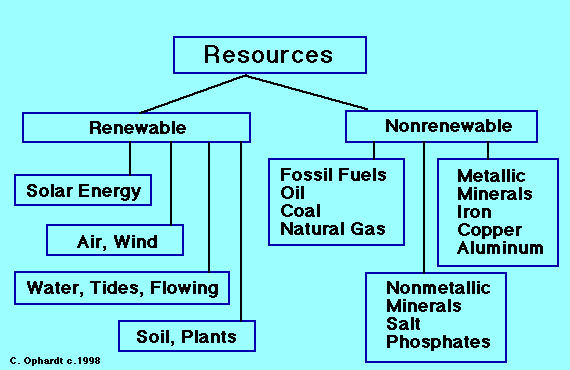
Energy is defined as the ability to do work. Energy comes in various forms. Here are 10 common types of energy and examples of them.
 

BASIC UNITS OF LIFE

The Functional and Structural Unit of all Living Organisms


Monday, 31 December 2018

Wanting to make a meaningful change for the New Year??

Related image

You are 10 times more likely to stick with a change made at the New Year. 
What's your resolution??


Wednesday, 14 November 2018

EMMA GOLDMAN- ON WOMEN´S RIGHTS AND SEX & LOVE

Emma Goldman Mug Shot, 1901

WOMEN´S RIGHTS
I demand the independence of woman," Goldman wrote in 1897, "her right to support herself; to live for herself; to love whomever she pleases, or as many as she pleases." Unlike many turn-of-the-century anarchists, who believed that any problems faced by women would simply disappear when anarchism ushered in a new society, Goldman worked from the conviction that women labored under distinct disabilities, which had distinct causes.
Throughout her career, Goldman addressed the need for the economic, social and sexual emancipation of women. According to her, the patriarchal family, sexual and reproductive repression, and financial difficulties all contributed to women's inferior status and prevented the full flowering of their individuality. Marriage, in her opinion, was simply a legalized form of prostitution, in which women traded sex for economic and social standing. Convinced that enforced childbearing further eroded women's economic and sexual autonomy, she became a prominent figure in the struggle for free access to birth control.
Goldman's determination to speak out on her controversial views on sexual and reproductive freedom led to frequent arrests. It also brought her into conflict with the mainstream women's movement, which she saw as conservative and benefiting primarily the middle class. Goldman opposed the contemporary fight for women's suffrage and efforts to open professional careers to women, believing they would result at best in the illusion of improvements to a fundamentally corrupt system. To her, these causes were mere distractions from deeper, more important internal struggles. "[Woman's] development, her freedom, her independence," she claimed, "must come from and through herself. First by asserting herself as a personality, and not as a sex commodity. Second, by refusing the right to anyone over her body;... by refusing to be a servant to God, the State, society, the husband, the family, etc.... By freeing herself from the fear of the public opinion and the public condemnation."

SEX & LOVE
Unlike some of her comrades, whose radical politics were matched by often conventional private lives, Goldman believed individuals should enter into and leave personal relationships with no constraints, a view determined by both her commitment to the principle of absolute freedom and her own disappointing experience of marriage. "If I ever love a man again," she said in 1889, "I will give myself to him without being bound by the rabbi or the law, and when that love dies, I will leave without permission."
Goldman applied her ideas about free love consistently to women and men, homosexuals and heterosexuals. Her advocacy of homosexual rights earned her opposition even from some within the anarchist community, who believed such an unpopular position would only heighten hostility toward the anarchist movement. As usual, Goldman was as ready to defy her own comrades as her political adversaries.
Believing that love and sexuality were crucial to personal and professional fulfillment, Goldman engaged in numerous passionate affairs throughout her life. Her first important relationship was with her life-long comrade, Alexander Berkman; her longest and most torrid affair was with her manager, Ben Reitman, who aroused a sense of her own sexuality that at times overwhelmed her rational, analytic side. "You have opened up the prison gates of my womanhood," she wrote to him. "[A]ll the passion that was unsatisfied in me for so many years, leaped into a wild reckless storm boundless as the sea."
Goldman cycled often between the energy, excitement and ecstasy that accompanied a new affair and the despair and hopelessness she experienced when the relationship failed to live up to her expectations. Despite her commitment to free love, Goldman was unable to overcome desperate feelings of jealousy, and she had trouble reconciling her public image as a strong, independent woman with the insecurity and pain men caused her. "[T]he world would stand aghast," she commented, "that I,...the strong revolutionist,...should have been as helpless as a shipwrecked crew on a foaming ocean."