Tuesday, 8 September 2020

The Best and Fastest Way to Learn Another Language...


It’s easier than you think to learn another language especially since you already know one.

Why Most of Us Failed in High School
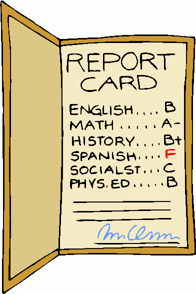
The majority of us have failed to learn a second language even though we’ve all learned our first.
Everyone on the planet is fluent in at least one language. So we all have what it takes to learn at least one.
So why is learning a second language so hard?
It’s because it’s taught wrong.
We were placed in a cold classroom and expected to speak in front of our peers in a language we didn’t know. It’s bad enough that public speaking is the number one fear for people and that’s in their native tongue.
Now imagine trying to speak in a foreign one.
And when we made mistakes, we were punished with red marks on the page and low grades. And unlike most classes, our failures in a language class are public. This conditioned us NOT to speak for fear of looking stupid or saying something wrong.
Imagine teaching babies to speak this way. No one would ever learn to speak.

Learning Like a Baby

As babies, we learned our first language by immersion, listening and mimicking every single day. All we could do was listen, 24 hours a day, 7 days a week. And not once, did we receive a grammar lesson from anyone.
We didn’t study grammar books. Endlessly conjugate verbs. Memorize vocabulary. We didn’t get marked down every time we made a mistake.
And that’s why we learned it so well.
But as adults, we cannot afford to go back to this approach. We don’t have the time. And the good news is that we don’t need to because we can actually learn faster.
We can use our working vocabulary to accelerate our learning.

Learn it Like a Video Game

Every time you start a new video game, you have to learn the controls. The first time you play, it takes a while to learn the controls. But the next game and next are easier since there are many similarities.
But think back to how video games teach you the controls, or at least the good games. They give you just enough training so that you can start playing. That was your goal. To play a video game.
So the sooner you’re playing, the sooner you’re having fun. And isn’t that the whole point of the exercise? And if you’re having fun, you don’t even realize that you’re still learning how to play the game. It just happens.
And before you know it, you just react without thinking. And you’re doing things — hard things — with ease. How did you get so good? By practicing. But it didn’t feel like practicing because you were too busy having fun to realize that you were practicing.
Now imagine if video games taught you how to play the way languages are traditionally taught. They’d have you practice jumping for 20 minutes. Then crouching. Then tomorrow, more jumping and then sneaking. Then the next day… Well, you get it.
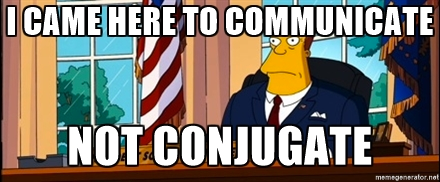
Learning a language is the same. You came here to speak. Not to conjugate. Or memorize. So the faster you can get to speaking, the better.
You need just a tiny bit of starting vocabulary and then you should start conversing. Isn’t that the whole point of the exercise? Isn’t that the goal?
So the sooner you get to speak, the sooner you’re having fun. And when you’re having fun, you won’t quit. And if you don’t quit, you’re going to learn. And you’ll learn much faster than the traditional boring methods.
You need to put in the time to learn anything. Imagine if that time was always fun. Before you know it, you’re speaking another language.
By the way, this is how music should be taught. But that’s a subject for another post.

But What About Grammar and Vocabulary?

Grammar is clearly important. But think back to how you learned grammar originally. And I don’t mean taking an English class in grade school. That’s just giving names and categories to things you already knew.
You learned grammar naturally by hearing it.
The same goes for Vocabulary. You hear words in context and surmise their meanings. You still do this in your native language. For example, if you don’t know what the word surmise means in the above sentence, you can figure out what it means because you understand all the other words.
Your parents didn’t drill into you the right way to use, gowentgoinggone. They didn’t run around the room pointing at objects saying their names. But you learned it before Kindergarten.
You learned all the necessary elements of grammar and basic vocabulary by experience and repetition. How? By listening and speaking.
This is the natural way of learning language.

Let me Tell You a Story…
My plan at this point in the article was to recommend multiple products that support this accelerated approach to language learning.
Unfortunately, I couldn’t find any.
Except for one. And in all honesty, it was developed by a friend of mine, Luke Pancoe with YLanguage.
So here’s his story…
He struggled for years to learn Spanish in grade school and failed. Frustrated, he took Latin in high school so he didn’t have to worry about speaking in front of anyone.
Then in college, Luke went to study abroad in Florence, Italy with no intention to learn the language since he thought everyone would speak English. But he was wrong. Fewer people spoke English than he expected.
Even though he couldn’t speak the language, he fell in love with Italy and its people and wanted desperately to communicate with Italians. He knew that this was holding him back from truly experiencing Italy like the Italians do.
Luke knew that the classroom approach didn’t work. So when he got home, he began a regimen over the next year watching YouTube videos, going to Italian meetups, talking with Italians online, reading grammar books, using different language apps like Duolingo and watching TV and films in Italian.
He was spending 7 to 8 hours a day for months in a desperate attempt to learn Italian. And in just under a year, he finally became fluent.
Armed with his new skill, he returned to Italy and it was like he was visiting a whole new world. For 3 weeks, he spoke only Italian. Being surrounded by his Italian friends and being able to easily converse with them, he felt what it’s like to be an Italian.
Next he learned Spanish and French. But this time it was much faster and required less effort. He was conversational in French in 4 months and Spanish in 3 months. Each time he learned a new language, he was able to optimize his process.
After learning 3 languages, Luke realized that he could teach anyone to be conversational in 3 months in any language by only dedicating 30 to 60 minutes a day. So he spent the next 2 years developing an online course called Italian in Your Pocket.
His system is basically everything I’m advocating in this article. It concentrates on speaking and listening. The very first week, his students are listening to conversations at normal speed and speaking.
Students, who put in the 30 to 60 minutes a day, are able to hold basic conversations totally in Italian with their fellow students in as little as 3 to 4 weeks.

The Language Revolution is Here

These results prove that traditional methods of classroom-style teaching can be greatly improved upon. Grammar and vocabulary do not need to be the center point for new students.
Hearing and speaking as soon as possible accelerates students’ understanding and speaking abilities in the new language. These quickly acquired skills reward students early and often, making the process of learning highly enjoyable. And because it’s enjoyable, students will want to continue learning. This positive feedback accelerates the learning process.
We need to have a real revolution in how we teach languages. Academia has failed nearly every student it’s encountered. We all have the ability to speak multiple languages and speak them well.

Wednesday, 1 January 2020

Happy New Year 2020!

With the completion of yet one more orbit around the sun we take our leave of one year and begin another. This time we also take our leave of the second decade of the twenty-first century and begin the third one! Time flies, as they say, it really does!


When I was a child, I thought a year was a very long time. Later, I thought that ten years was a long time. Now, I am inclined not even to recognize ten years as an especially long time. Ten years is not to be dismissed out of hand, but it is only, after all, ten years. Perhaps if we lived rather longer lives we might come to see centuries, and millenia in the same way as for the Earth.


Wednesday, 20 November 2019

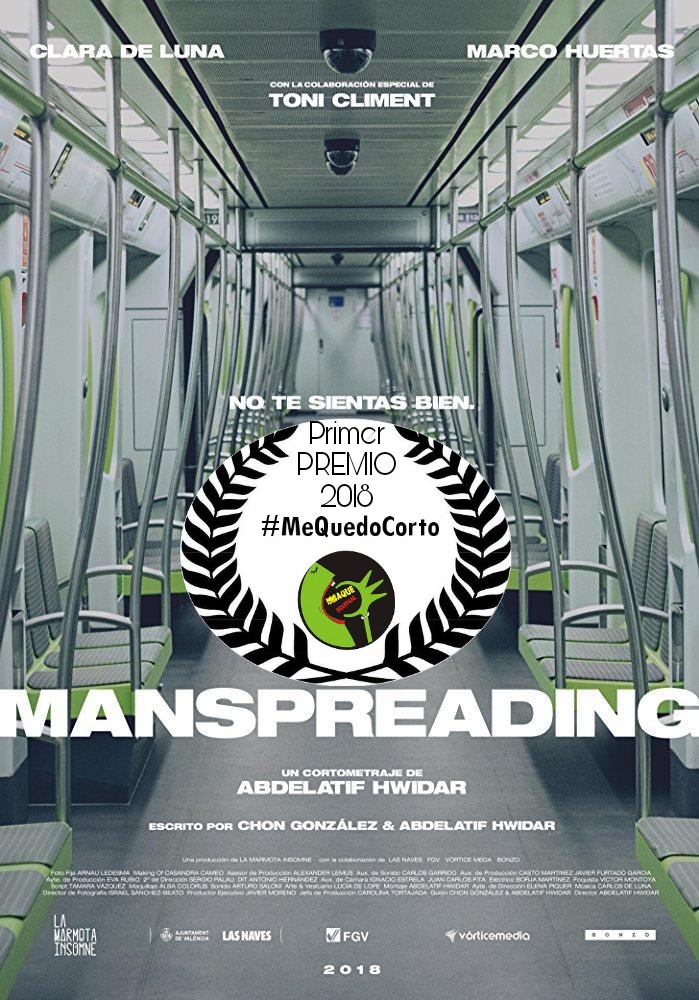
TALKING ABOUT MANSPREADING


Image result for manspreading
manspreading
/ˈmansprɛdɪŋ/ noun
INFORMAL
  1. the practice whereby a man, especially one travelling on public transport, adopts a sitting position with his legs wide apart, in such a way as to encroach on an adjacent seat or seats.
    "a campaign to discourage manspreading or using an adjacent seat as a footrest"


“Tendría que haber más gente como nuestra protagonista: valientes que no se muerden la lengua ante cualquier injusticia que presencian”, destaca el director Abdelatif Hwidar, premio Goya 2008 y favorito para dar el gran salto a los Óscar por este mismo corto. 

Ponernos en contexto es fácil. Con sólo leer el título del cortometraje ya tenemos una pequeña sinopsis puesto que el anglicismo se ha hecho popular para denunciar un micromachismo que, por desgracia, ocurre diariamente en cualquier transporte público de cualquier ciudad del mundo. En Manspreading, el antagonista de la historia viaja en un metro y se sienta abriéndose de piernas de manera despreocupada y ocupando parte del asiento adyacente, lo que desencadenará la ira de una de las pasajeras...

EL ‘DESPATARRE MASCULINO’ ¿MACHISMO O MALA EDUCACIÓN?

 "No es algo que ocurra de forma esporádica, si te fijas te darás cuenta de que es una práctica muy común. No es difícil ver a las mujeres con las piernas cerradas y muy incómodas porque hay un hombre a su lado que está invadiendo su espacio "

 Los críticos señalan que el problema no se debería focalizar en el género masculino, porque esta actitud no es exclusiva de hombres. De hecho, hace tiempo se acuñó otro término, Shebagging, para describir la ocupación de espacio por parte de los bolsos de las mujeres. El problema, apuntan, no es el machismo, sino la falta de civismo.

Pero hay quien no está muy de acuerdo: “No es cuestión de mala educación sino de que igual que a las mujeres nos han enseñado a sentarnos con las piernas muy juntas (como si tuviéramos que sujetar algo entre nuestras rodillas) a los hombres les han transmitido una idea de jerarquía y de territorialidad, como si el espacio les perteneciese”.

Ya en los setenta la fotógrafa Marianne Wex exploró esta cuestión en su ensayo Let’s take back our space, que más tarde se convirtió en un libro. A través sus fotografías, Wex analizó los lenguajes corporales masculino y femenino y la forma en la que cada género se situaba el espacio público. Su conclusión fue que la tendencia masculina es la de ocupar más espacio y la femenina, retraerse.

En 2014, el gobierno vasco decidió tomar medidas para evitar lo que consideraba una “distribución sexista” de las zonas de recreo en los colegios, es decir, que los niños suelan ocupar la mayor parte del patio –principalmente jugando al fútbol—, mientras que las niñas queden habitualmente arrinconadas. La iniciativa formaba parte de un plan para la educación y la prevención de la violencia de género en el sistema educativo.


A PROPÓSITO DE MANSPREADING
Apariciones, habla de los usos del cuerpo femenino. Hasta no hace mucho, abrir las piernas era tan vergonzoso que las mujeres no podían tocar el chelo. Se consideraba obsceno. 
Historia del ojo, de Georges Bataille, traducida por la autora de Apariciones, Margo Glantz, fué criticada como “una traducción piernabierta”. Indudablemente no hubieran dicho eso del trabajo de un hombre. El protagonista de la novela es una niña que se rebela abriendo las piernas porque el padre quiere que las mantenga cerradas como una señorita. Hoy las modelos posan despatarradas. Antes era indecente: las piernas solo se abrían para hacer el amor o dar a luz pero los hombres nunca han tenido ningún obstáculo para sentarse  como les ha dado la gana.

EL MIEDO DEL MACHISMO a la mujer sin miedo...


“HAY CRIMINALES QUE PROCLAMAN TAN CAMPANTES 
‘LA MATÉ PORQUE ERA MÍA’, ASÍ NO MÁS, COMO SI FUERA COSA DE SENTIDO COMÚN Y JUSTO DE TODA JUSTICIA Y DERECHO DE PROPIEDAD PRIVADA, QUE HACE AL HOMBRE DUEÑO DE LA MUJER. PERO NINGUNO, NINGUNO, NI EL MÁS MACHO DE LOS SUPERMACHOS TIENE LA VALENTÍA DE CONFESAR ‘LA MATÉ POR MIEDO’, PORQUE AL FIN Y AL CABO... 

EL MIEDO DE LA MUJER A LA VIOLENCIA DEL HOMBRE 
ES EL ESPEJO DEL MIEDO DEL HOMBRE A LA MUJER SIN MIEDO”
Eduardo Galeano. 


Friday, 15 November 2019

ENVIRONMENTAL NEWS TO SHARE AND COMMENT IN CLASS


Student: Maribel Villegas ECA 2

A piece of news.       

https://www.forbes.com/sites/jamesellsmoor/2019/04/26/cruise-ship-pollution-is-causing-serious-health-and-environmental-problems/#299d7da37db3                                               

Cruise ship pollution is causing serious health and environmental problems.


Image result for Cruise ship pollution is causing serious health and environmental problems.

Cruise ship 'Independence of the Seas' at the cruise terminal on Wilhelmina Pier, Netherlands, sending black smoke into the atmosphere.

The cruise industry transported over 26 million customers last year and was worth upwards of $117 billion in 2017. All market projections show that the industry will continue to grow as operators continue to build new state-of-the-art ships with the latest in leisure opportunities.
Cruise ships have often been described as ‘floating cities’, and as environmental groups have pointed out that they are just as if not more polluting. A passenger’s carbon footprint triples in size when taking a cruise and the emissions produced can contribute to serious health issues. On top of the pollution caused by their exhaust fumes, cruise ships have been caught discarding trash, fuel, and sewage directly into the ocean.
The dumping of sewage and other such pollutants into the ocean has only aggravated environmental groups and governments charged with cleaning it up, leading the decisions made by some in the cruise industry’s to release more pollutants to be met with widespread condemnation.


Sunday, 10 November 2019

ENVIRONMENTAL NEW TO SHARE AND COMMENT IN CLASS


Ivory Coast law could see chocolate industry ‘wipe out’ protected forests

Image result for ivory coast chocolate industry
A new law in Ivory Coast is removing the rights of forest. The demand of production of chocolate is so high so than protected forest until now are in danger of deforestation´.
Workers earn less than a dollar a day despite of working with a heavy level of pesticides and bad job conditions.
There are people in the community who are struggling against this poor conditions.
The demand for chocolate is driving deforestation in Ivory Coast, which produces more than a third of the world's cocoa. Around 90% of the country's forests have been destroyed since independence in 1960, forcing species such as elephants and chimpanzees in the forest to almost become extinct.
Studies estimate that there are more than 2 million children working in the cocoa fields of West Africa, and trafficking and slavery are widespread.
Companies say they want to improve conditions but they also say that “Chocolate companies have no responsibility for anything, they have a supply chain of They are not responsible”. And Alain-Richard Donwahi, the Ivory Coast’s minister for water and forests, committed to restoring a fifth of the forest cover the country had lost by 2030.
The minister did not respond to repeated requests from the Guardian to comment for this article.
AUTHOR : Nely Soriano