
Saturday, 24 November 2018

Wednesday, 21 November 2018

Wednesday, 14 November 2018
EMMA GOLDMAN- ON WOMEN´S RIGHTS AND SEX & LOVE

WOMEN´S RIGHTS
I demand the independence of woman," Goldman wrote in 1897, "her right to support herself; to live for herself; to love whomever she pleases, or as many as she pleases." Unlike many turn-of-the-century anarchists, who believed that any problems faced by women would simply disappear when anarchism ushered in a new society, Goldman worked from the conviction that women labored under distinct disabilities, which had distinct causes.
Throughout her career, Goldman addressed the need for the economic, social and sexual emancipation of women. According to her, the patriarchal family, sexual and reproductive repression, and financial difficulties all contributed to women's inferior status and prevented the full flowering of their individuality. Marriage, in her opinion, was simply a legalized form of prostitution, in which women traded sex for economic and social standing. Convinced that enforced childbearing further eroded women's economic and sexual autonomy, she became a prominent figure in the struggle for free access to birth control.
Goldman's determination to speak out on her controversial views on sexual and reproductive freedom led to frequent arrests. It also brought her into conflict with the mainstream women's movement, which she saw as conservative and benefiting primarily the middle class. Goldman opposed the contemporary fight for women's suffrage and efforts to open professional careers to women, believing they would result at best in the illusion of improvements to a fundamentally corrupt system. To her, these causes were mere distractions from deeper, more important internal struggles. "[Woman's] development, her freedom, her independence," she claimed, "must come from and through herself. First by asserting herself as a personality, and not as a sex commodity. Second, by refusing the right to anyone over her body;... by refusing to be a servant to God, the State, society, the husband, the family, etc.... By freeing herself from the fear of the public opinion and the public condemnation."
SEX & LOVE
Unlike some of her comrades, whose radical politics were matched by often conventional private lives, Goldman believed individuals should enter into and leave personal relationships with no constraints, a view determined by both her commitment to the principle of absolute freedom and her own disappointing experience of marriage. "If I ever love a man again," she said in 1889, "I will give myself to him without being bound by the rabbi or the law, and when that love dies, I will leave without permission."
Goldman applied her ideas about free love consistently to women and men, homosexuals and heterosexuals. Her advocacy of homosexual rights earned her opposition even from some within the anarchist community, who believed such an unpopular position would only heighten hostility toward the anarchist movement. As usual, Goldman was as ready to defy her own comrades as her political adversaries.
Believing that love and sexuality were crucial to personal and professional fulfillment, Goldman engaged in numerous passionate affairs throughout her life. Her first important relationship was with her life-long comrade, Alexander Berkman; her longest and most torrid affair was with her manager, Ben Reitman, who aroused a sense of her own sexuality that at times overwhelmed her rational, analytic side. "You have opened up the prison gates of my womanhood," she wrote to him. "[A]ll the passion that was unsatisfied in me for so many years, leaped into a wild reckless storm boundless as the sea."
Goldman cycled often between the energy, excitement and ecstasy that accompanied a new affair and the despair and hopelessness she experienced when the relationship failed to live up to her expectations. Despite her commitment to free love, Goldman was unable to overcome desperate feelings of jealousy, and she had trouble reconciling her public image as a strong, independent woman with the insecurity and pain men caused her. "[T]he world would stand aghast," she commented, "that I,...the strong revolutionist,...should have been as helpless as a shipwrecked crew on a foaming ocean."


Monday, 12 November 2018


Friday, 26 October 2018
What Can You Do RIGHT NOW To Save The Earth?
Our climate is changing drastically and quickly, so what steps can YOU take to stop it today?
REMEMBER:
"MANY SMALL PEOPLE, IN SMALL PLACES, DOING SMALL THINGS CAN CHANGE THE WORLD" Eduardo Galeano

Tuesday, 23 October 2018

Friday, 19 October 2018

Sunday, 14 October 2018

Friday, 12 October 2018

Wednesday, 10 October 2018


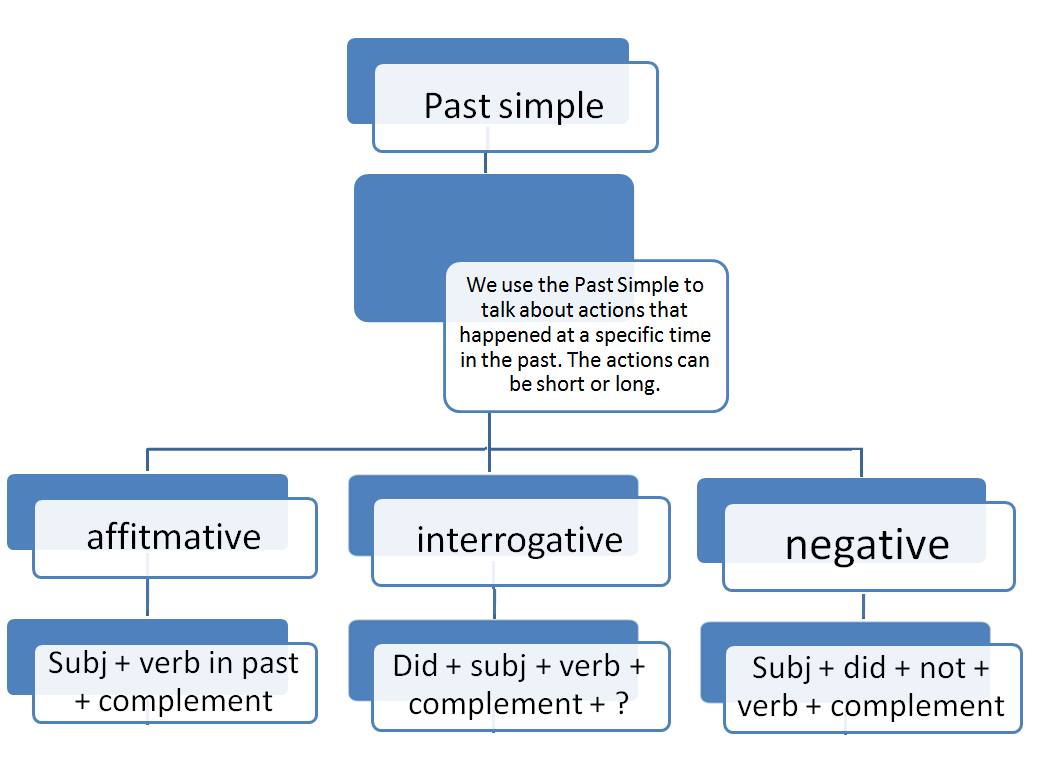


Tuesday, 2 October 2018


Monday, 24 September 2018
ONLINE DICTATIONS TO IMPROVE YOUR LISTENING AND SPELLING
By doing these dictations you can improve your English listening and spelling skills.
Choose your level and don't worry about your mistakes.
It's usual to make some of them at the beginning. Good luck!
Go to link here now and try: Dictations

Choose your level and don't worry about your mistakes.
It's usual to make some of them at the beginning. Good luck!
Go to link here now and try: Dictations


Monday, 7 May 2018
ECA ORAL PRESENTATION VIDEOS
THE WATER CYCLE
ROCK CYCLE & ROCK TYPES
NITROGEN CYCLE
THE CARBON CYCLE
PLATE TECTONICS
Thursday, 3 May 2018
Engineering Design Turns Mushrooms into Foam
Engineering Design Turns Mushrooms into Foam
What if you could replace all the Styrofoam-- to-go containers, or those big pieces that hold a new computer, or Styrofoam peanuts that you use in packing? What if you could replace all of that with something that biodegrades and doesn't use petroleum in the manufacturing process?
Well, that's exactly what the founders of Ecovative Design are trying to do with mushrooms. Gavin McIntyre is co-founder and Chief Science Officer for Ecovative. And he joins us from the studios of AMC in Albany, New York. So Gavin, what inspired this idea?
GAVIN MCINTYRE: A simple walk in the woods, actually, by the company's other founder, Eben Bayer. Eben grew up on a maple syrup farm, so spending time in the woods was not something unique. What he noticed was some fungal mycelium, which is tissue of a mushroom, growing on and binding wood chips together. And the real inspiration and aha moment came from, how can we translate this natural process, this adhesion that occurs in Nature, to an industrial setting, and turn this natural tissue into a living glue?
INTERVIEWER: What was the first step that you and Eben took to figure out if you could even grow things in a controlled manner?
GAVIN MCINTYRE: This technology really got started while Eben and I were both undergraduates atRensselaer Polytechnic Institute. We just went online. We looked up some gourmet mushroom cultivation kits. And we brought them in a house, mixed them with some really low-density materials, and we fabricated our own tools so we could grow these products into shapes.
These first materials were mixed in our kitchens. We didn't have a clean room to start off in. And they were actually incubated under our beds, and in our closets. Because, as you might be aware,mushrooms really like dark places.
INTERVIEWER: All the greatest science is done in kitchens and at home in closets, I think. Was the first attempt, or those first attempts, successful?
GAVIN MCINTYRE: Surprisingly, they were. But when we first launched the company and, and started to repeat our process over and over again in different spaces, that's where we ran into a lot of difficulties. We were very lucky and fortunate to have a great mycologist, Sue Vanhook, who's, a mushroom biologist, join our team and really help educate us on the biological aspects of this process.
INTERVIEWER: OK, so let's talk a little bit more about the biology, in particular, because it's not the whole mushroom. It's not the whole fungus that you're using. You're using a very particular part of it called mycelium.
Mycelium is a key building block in this thing that we know as a mushroom, right?
GAVIN MCINTYRE: Exactly, mycelium is truly the supporting structure of all fungi, from mould mushroom species. The mushroom basically derives all of its energy, its nutrients, through this network known as mycelium. And then the mushroom itself is comprised of mycelium.
What's interesting is the mycelium differentiates, and forms mushrooms or the vegetative root-type structure that grows on lawns and in trees, for example, just by the environment in which is growing in. So based on the temperature, the CO2 levels, and even light, the mushroom will form or it'll just generate more of that vegetative mycelium.
INTERVIEWER: So that's what makes it so flexible. Essentially, it's a polymer. It's Nature's original analogy to what we see in plastics all around us today. Is it going too far to say that?
GAVIN MCINTYRE: That's true. In terms of its macroscopic level, what we can see with the naked eye, the mycelium really is that polymer construct. But if you look even closer at the molecular level, what you'll see is the mycelium-- in terms of its cell wall-- is comprised of chitin.
This is the same biopolymer that you'll find in lobster and crab shells. So it's very robust. It's water-insoluble, and it's highly cross-linked, which makes it very strong and great for industrial applications.
INTERVIEWER: So how exactly do you grow it? The mycelium needs some kind of substrate, right, or framework in which to grow. What materials do you use for that?
GAVIN MCINTYRE: We go to local farms. We take things like corn stalk, or seed husks and seed hulls-- byproducts of the agriculture industry. We mix them together with the tissue culture of fungal mycelium.
And over a period of three to five days the mycelium will grow and start to bind these materials together. The beauty of this process is that there's no additional embodied energy. All the energy for growth comes directly from the agricultural waste. So it's really a set-and-forget process. We put it on the shelf, and we come back to it three days later, and we have a finished product.
INTERVIEWER: Can you make it into any shape?
GAVIN MCINTYRE: We have been able to make in any shape, from very customized and complex geometries for protective packaging-- replacing those end-caps and things you might get around a computer-- to even large-scale panels for the construction industry. And today we're actually growing a house.
INTERVIEWER: You're growing a house, you re--, an actual house?
GAVIN MCINTYRE: We are indeed. So we've constructed some walls. We're growing some mycelium between those walls, and we're even providing the house with acoustical tiles since all of our materials are class A firewalls. You can hit them with a blow torch. It just won't burn.
INTERVIEWER: Well Gavin McIntyre is chief scientist at Ecovative Design. They're using mycelium found in Nature in mushrooms to create all manner of new packing and construction material.Gavin McIntyre, thanks so much.
GAVIN MCINTYRE: Yeah, thanks for having me. I appreciate the opportunity.
Subscribe to:
Posts (Atom)